

The evolution of work has changed how we communicate with one another within working environments while also mitigating the barrier of geography. Video conferencing has become more than just a solution to bridge distances—it’s now a cornerstone of effective workplace communication. The pandemic accelerated the adoption of video conferencing, and even as the world has returned to a mix of office and remote work, this technology remains a critical tool. Now, as we look to the future, video conferencing is poised to transform further, driven by innovations in artificial intelligence, immersive collaboration, and hybrid work models.
Let’s explore the top five video conferencing trends that are shaping the future of workplace communication.
1. AI-Driven Meeting Analytics
Artificial intelligence (AI) is making a significant impact on how we conduct and analyze meetings. Today, AI goes beyond basic speech-to-text transcriptions and has evolved into an intelligent assistant that can analyze discussions, provide summaries, and even suggest action items.
For instance, platforms like Microsoft Teams have introduced features that automatically generate meeting summaries and capture key decisions and tasks. This not only ensures that nothing is missed during the meeting but also saves time by streamlining post-meeting tasks.

Fast forward to a world where your video conferencing solution can notify you of participants’ engagement levels, highlight key points discussed, and identify tasks assigned to different team members, all without the need for human intervention. AI-driven meeting analytics is making this possible, and it’s altering how businesses prepare for and follow up on meetings.
Furthermore, AI is starting to assist in video conferencing etiquette by automatically muting participants when background noise is detected, adjusting video quality based on bandwidth, and even suggesting optimal meeting times based on participants’ calendars. These innovations are enhancing efficiency and reducing friction during virtual meetings.
2. Immersive Collaboration Tools
As businesses increasingly adopt hybrid work models, the demand for more immersive and interactive virtual meetings has surged. Immersive collaboration tools are meeting this need by creating environments where participants can feel more present and engaged, even when they are not physically in the same room.
For instance, solutions like Microsoft Teams Rooms integrate video conferencing with virtual whiteboards, 3D object manipulation, and real-time collaboration on documents. These tools create a shared experience that makes meetings more dynamic, helping teams brainstorm, solve problems, and collaborate in real-time.
In the future, we can expect these tools to evolve into even more immersive experiences, such as virtual reality (VR) or augmented reality (AR)-enabled meetings, where team members can interact with 3D objects, data visualizations, or architectural models as if they were in the same physical space. Companies like Poly and Logitech are already offering cameras and devices that enhance the visual and audio experience, laying the groundwork for these innovations to become mainstream.
3. Hybrid Work Integration
The rise of hybrid work has created new challenges for workplace communication. Video conferencing solutions are now designed to ensure seamless communication between remote and in-office workers.

This has led to the rise of solutions like “Teams Rooms,” which provide fully integrated systems that connect remote participants with in-office meeting rooms. Teams Rooms allow for a consistent, high-quality meeting experience, regardless of where participants are located. Tools like Poly’s video conferencing systems and Jabra’s intelligent audio devices optimize both video and sound, ensuring that remote team members feel equally present in the conversation.
Hybrid work integration doesn’t stop at connecting employees. It also involves managing the varying schedules and expectations of a hybrid workforce. AI-driven scheduling, as mentioned earlier, can ensure that meetings are set up at times that work for everyone, taking into account time zones and working hours. Solutions from partners like NEAT and EPOS are focusing on ensuring that hybrid meetings are not only productive but also inclusive of everyone’s contributions.
4. Advanced Security Features
As companies rely more heavily on video conferencing for critical communications, security concerns have become more critical. Data breaches, meeting hijacking, and unauthorized access are real threats that businesses must address. In response, video conferencing providers are implementing advanced security features to protect both the content of meetings and the participants.
End-to-end encryption is becoming the norm in platforms like Microsoft Teams, ensuring that sensitive information discussed during meetings remains confidential. Additionally, multi-factor authentication, secure guest access, and role-based access controls are enhancing the security of virtual meetings.
Video conferencing solutions like those from EPOS and JPL also prioritize secure communications, integrating encrypted audio and video streams to prevent eavesdropping. This trend will continue to grow as businesses recognize the importance of safeguarding their virtual meetings.
5. Seamless Integration with Workplace Tools
The future of video conferencing isn’t just about the meetings themselves but also about how these tools integrate into the broader workplace ecosystem. As businesses embrace digital transformation, video conferencing solutions must seamlessly connect with other essential tools like project management software, CRM systems, and collaborative platforms.
Solutions like Microsoft Teams have already established themselves as central hubs for workplace communication, integrating chat, video conferencing, file sharing, and project management. But beyond that, we’re seeing platforms like Poly and Jabra offering hardware and software solutions that integrate with not only video conferencing platforms but also other office tools, making workplace communication smoother and more efficient.
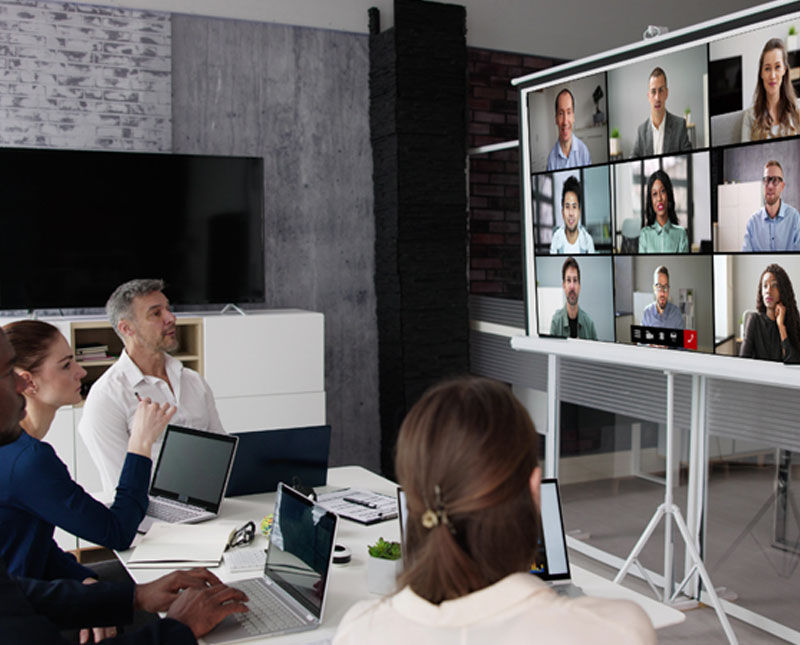
Rova Unify Delivers Cutting-Edge Video Conferencing Solutions
With these innovative technologies, your business can thrive in the hybrid work environment, ensuring that your teams stay connected, productive, and secure—no matter where they are.